
2021
Youth advocacy capacity building
OVIWCE joined the Advocacy2Action learning process, strengthening practical skills for youth-led advocacy and action on the rights and well-being of women and girls.
Health first. Evidence led. Community rooted.
Follow our work
Featured partnership programme
OVIWCE translated African Union and UNICEF support into a community-led response addressing violence against women and girls in Ibadan North, Oyo State.
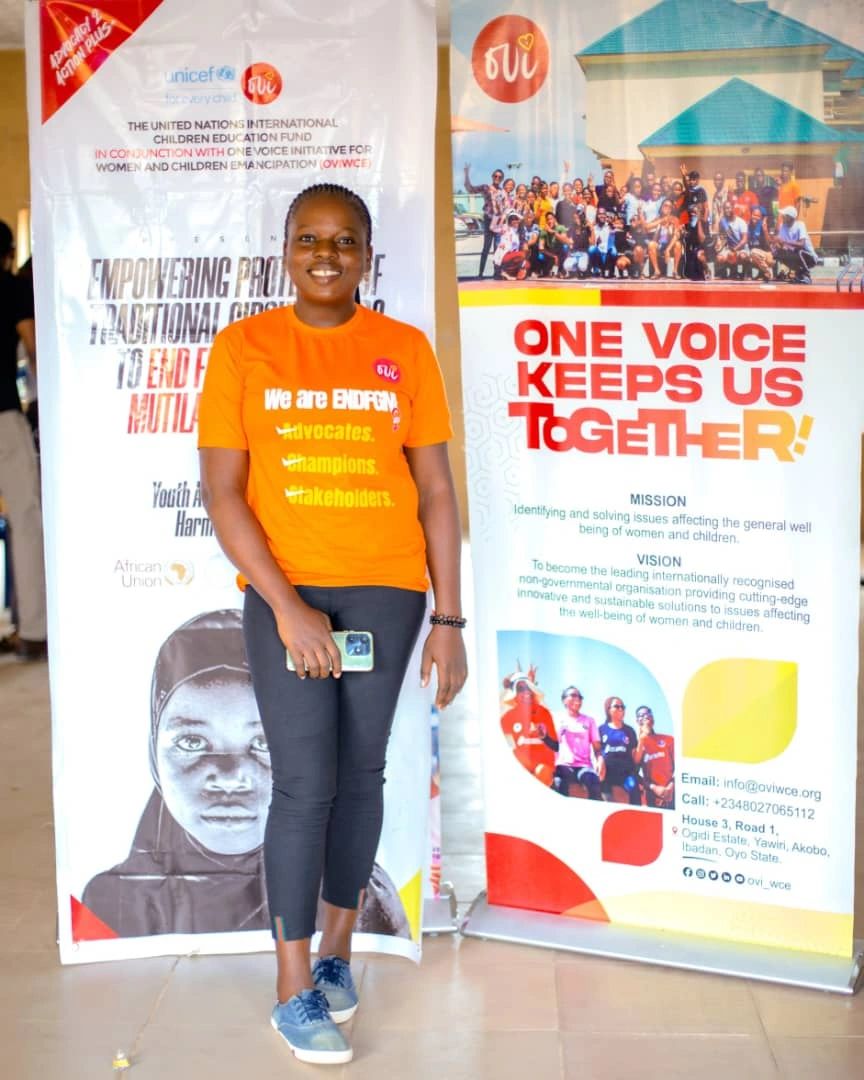
African Union · UNICEF · OVIWCE
Advocacy2Action gave young advocates a pathway from learning to implementation. After joining the capacity-building process, OVIWCE was selected in June 2023 for Advocacy2Action PLUS+, a grant-supported initiative focused on violence against women and girls.
OVIWCE’s response focused on male protégés of traditional circumcisers—people positioned close to the social and cultural systems that can sustain FGM. The programme combined participatory research, targeted education and community advocacy to help participants become part of the solution.
50
END-FGM champions
Ibadan North
community focus
Research + action
programme model
The programme pathway
2021
OVIWCE joined the Advocacy2Action learning process, strengthening practical skills for youth-led advocacy and action on the rights and well-being of women and girls.
2023
The African Union and UNICEF selected OVIWCE for grant support to deliver a locally designed response to violence against women and girls.
Community action
The initiative worked with male protégés of traditional circumcisers in Ibadan North, combining research, education and dialogue on female genital mutilation.
Lasting voice
Fifty protégés were prepared as champions who could carry informed END-FGM advocacy into their own communities and networks.
How OVIWCE worked
The approach linked what participants knew and believed with education, stakeholder engagement and a practical advocacy role.
Participatory research explored knowledge, perceptions, cultural influences and intentions surrounding FGM.
Targeted education connected the health, rights and legal consequences of FGM with participants’ lived context.
Participants were supported to become credible advocates for ending FGM within the communities they know.
Community, government, academic, civil-society and primary-healthcare stakeholders were brought into the response.
From programme to public evidence
OVIWCE’s research on knowledge, perceptions and intentions concerning FGM among male protégés was presented at the 2025 Gender and Inclusion Summit and later published as an original article in 2026.
Continue the action